


Table of Contents

What is Fipronil?
Does Fipronil kill flea eggs?
How to get rid of flea eggs in home
FAQs about fipronil and flea eggs

First month flea FREE (*£3.49 P&P first month only)

Speedy same day dispatch**

12+ million flea & worm packs sold

Tailored to your pet
Blog Home

Flea
Ticks & Lice
Worming
Itch News
Itch Insights
Q&A

Table of Contents
What is Fipronil?
Does Fipronil kill flea eggs?
How to get rid of flea eggs in home
FAQs about fipronil and flea eggs
Fipronil is an active ingredient in flea treatment solutions and kills adult fleas only. Fipronil does not kill flea eggs. This means your home can continue to develop fleas and reinfestation is very likely. Fipronil-only flea treatments will not target immature fleas, like flea eggs and larvae which are the root of your flea problem. To get rid of 100% fleas you must kill flea eggs. Let’s break down the science and look at flea treatment options which do kill flea eggs, to keep your pet, family and home safe!
Fipronil is an active ingredient used in flea treatments to kill fleas on cats and dogs. In line with the Veterinary Medicines Directorate regulations, Fipronil is safe to use on pets when applied in the recommended dose.
Fipronil is an insecticide that interacts with ligand-gated chloride channels, in particular those gated by the neurotransmitter gamma-aminobutyric acid (GABA). Therefore, Fipronil blocks the pre and post-synaptic transfer of chloride ions across cell membranes. This results in uncontrolled activity of the central nervous system and death of fleas, ticks and lice. Fipronil kills fleas within 24 hours and ticks as well as lice within 48 hours, after exposure.
Flea treatments that only include active ingredient, Fipronil will only target adult fleas. These treatments tend to be cheaper and available over-the-counter only. Fipronil is used on cats and dogs through a liquid solution, flea tablets or chewable flea medicine will use different active ingredients.
Fipronil does not kill flea eggs because it targets the central nervous system of fleas - Something flea eggs and larvae do not possess until they are fully grown. In order to kill flea eggs, the flea treatment you use on your pet needs to specifically target immature fleas.
It is essential to target all stages of the flea life cycle, otherwise you won’t successfully stop a flea infestation. Here is How To Break The Flea Life Cycle!
This is the flea life cycle. And ultimately the reason why fleas are so tricky to get rid of.
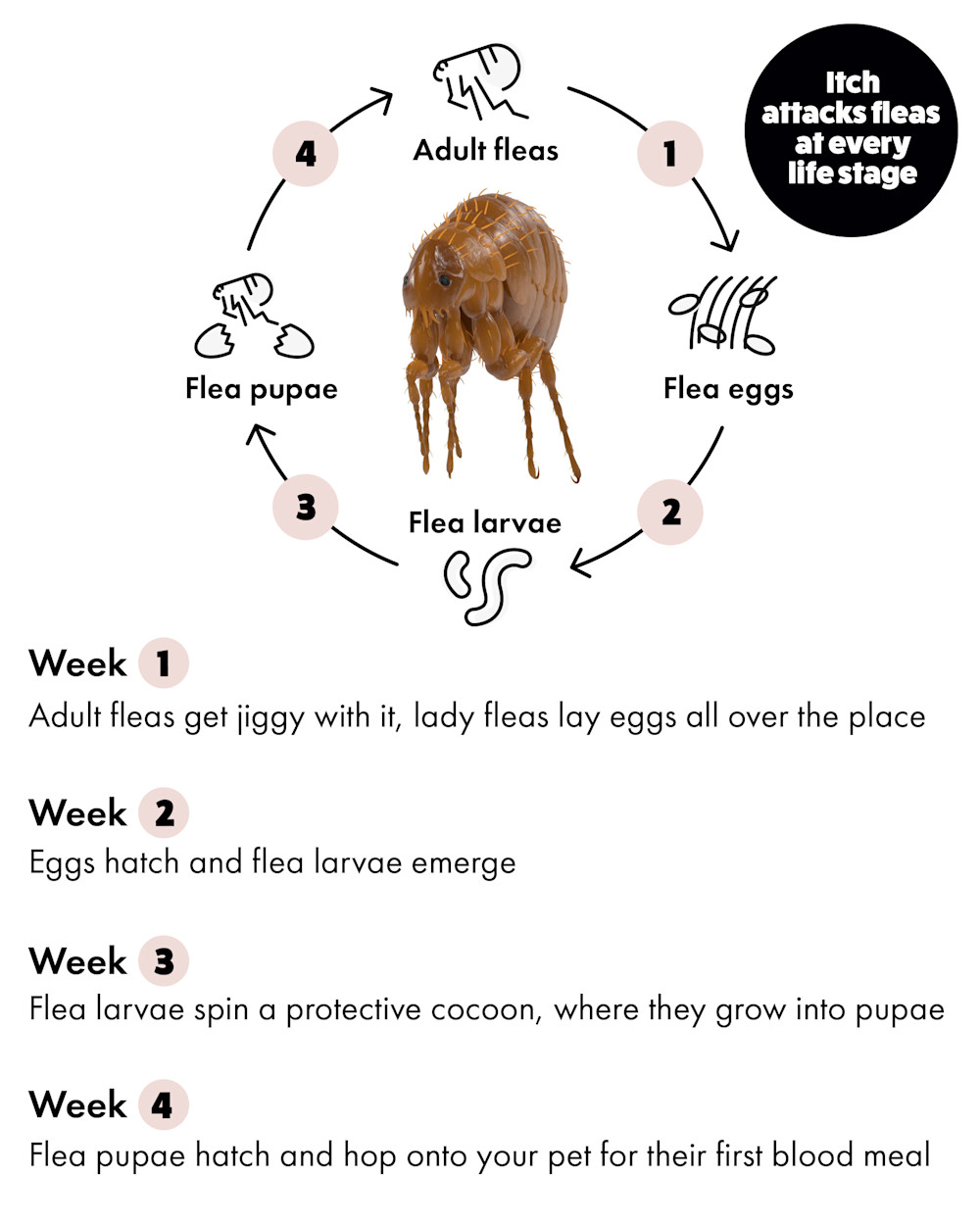
Around 50 flea eggs are laid everyday on your pet, and due to their silky shell these flea eggs roll off onto carpet, floorboards and in cracks. In less than 2 weeks, the flea eggs in your home will hatch and continue infesting your pet and house. By killing flea eggs, you get to the root of the flea problem and can stop the flea infestation, for good!
Flea treatments that kill flea eggs will include active ingredients that specifically target immature fleas, such as flea eggs and larvae. Itch Flea Treatment for Cats and Dogs, uses a powerful combination of active ingredients to target all possible growths of the flea life span.
Active ingredient 1 = Fipronil
Fipronil attacks the central nervous systems of fleas and kills them within 24 hours and kills ticks within 48 hours.
Active ingredient 2 = S-(Methoprene)
S-(Methoprene) directly penetrates flea eggshells, preventing flea eggs and pupae from developing, breaking the fast and furious flea life cycle.
It’s important to note that no flea treatment directly kills flea pupae, this is because protective cocoons stop insecticides from reaching the pupae and can survive for several months, sometimes 6 months or longer! However, Itch Flea Treatment stops the development of fleas into pupae by penetrating flea eggshells.
The best way to get rid of flea eggs in your home is to vacuum thoroughly, wash pet bedding at a high temperature, use a suitable household flea spray and treat all pets with an effective flea treatment. Flea eggs can quickly spread throughout your home, particularly in carpets, sofas, rugs and pet bedding.
Unlike adult fleas, flea eggs don't stick firmly to your pet's fur. Instead, they fall off into your home, where they can hatch into flea larvae and eventually develop into adult fleas.
1. Vacuum your home thoroughly
Vacuuming is one of the most effective ways to physically remove flea eggs from your home.
Focus on areas where your pets spend the most time, including:
Carpets and rugs, particularly around the edges
Sofas, cushions and upholstered furniture
Pet beds, blankets and sleeping areas
Skirting boards, floorboard gaps and corners
Under furniture and between sofa cushions
Vacuum daily during an active infestation, paying particular attention to hidden areas where flea eggs and larvae may accumulate.
Top tip: Empty your vacuum cleaner immediately after use into an outside bin and dispose of it to reduce the chance of fleas surviving inside.
2. Wash pet bedding and soft furnishings
Flea eggs can easily become trapped in blankets, bedding and washable fabrics.
Wash pet bedding, blankets and removable covers at 60°C where you can. A hot wash and thorough drying can help kill flea eggs and other flea life stages.
Repeat this regularly while dealing with an infestation.
3. Use a household flea spray
A household flea spray can help control fleas developing in carpets, upholstery and other suitable surfaces.
Look for a product containing an insect growth regulator (IGR), such as pyriproxyfen or (S)-methoprene, like Itch Flea House Spray. These ingredients disrupt flea development and help prevent eggs and larvae from developing into breeding adult fleas.
Always follow the product instructions, keep pets and children away during application, and ventilate rooms as directed. Be particularly cautious with products containing permethrin as it is toxic to cats.
4. Treat every pet in your home
Even if you've removed flea eggs from your carpets, adult fleas living on your pet can continue laying new eggs.
Treat all cats and dogs in your household using an effective, species-appropriate flea treatment recommended for their age and weight, like Itch Flea Treatment for Cats and Itch Flea Treatment for Dogs which kills adult fleas, larvae and eggs to stop fleas infesting your pet.
Fleas will start to die within 24 hours of applying Itch Flea Spot On Flea Treatment. This will quickly stop your pet itching and getting flea bites. However, the fleas won’t disappear overnight, you need to treat your pet regularly with safe and effective flea treatment. Stick to a monthly flea treatment plan, like Itch Flea Subscription to keep fleas away and stop the chances of reinfestation.
5. Repeat cleaning to break the flea life cycle
Flea eggs can hatch in approximately 1 to 10 days in the right conditions - Warmth, humidity and near a blood host - but other stages of the flea life cycle can survive much longer. This is why you can still see fleas even after cleaning and treating your home. Flea pupae inside protective cocoons are particularly difficult to eliminate and can emerge weeks later.
Continue vacuuming (at least everyday for the first 2 weeks) and washing bedding regularly, and maintain effective flea prevention for all pets. It can take several weeks, and sometimes longer, to bring a significant infestation under control.
Can you get rid of flea eggs completely? Yes, an infestation can be eliminated, but there is no guaranteed instant solution. Use flea treatment that targets flea eggs i.e. isn’t a Fipronil-only flea medicine and continue to use it for at least 3 months. Alongside this, consistent cleaning and a good household flea spray are the keys to stopping eggs from developing into another generation of fleas.
How long does it take for fipronil to kill fleas?
Fipronil gets to work within hours of it being applied to your pet in a spot-on flea treatment solution. It then takes about 24 hours to fully kill the adult fleas on your pet, and will continue to kill any fresh fleas that hop onto your pet's fur, until their next treatment is due.
What kills flea eggs immediately?
The best to kill fleas immediately, is to kill them with heat - Do this by washing the items with flea eggs on a high heat, more than 60ºC and follow with a hot tumble dry. Household flea sprays like Itch Flea House Spray kills flea eggs in your home, but insecticide sprays for the home are not safe to use on pets.
How long does fipronil stay active?
Fipronil stays active on your pet and continues to kill fleas for 30 days. Spot on flea treatments allow fipronil to be absorbed into the skin's oils where the active ingredients stays and continues to kill fleas for 4 weeks. After this time, another spot-on flea treatment should be applied to keep up flea protection on a pet.
Here's everything you need to know about How A Spot On Flea Treatment Works!
Vet strength flea treatment, Itch Flea kills adult fleas on your cat or dog in 24 hours and stops flea eggs and larvae from developing to get rid of fleas, for good.Itch Flea treatment scientifically proven to target adult fleas, eggs and larvae. It is perfectly tailored to your pet and delivered for free, every month, so you never forget. No gaps, no infestations.
SHOP NOW

Share


You can’t get rid of fleas in the house to kill them overnight, it takes a little longer than that. In fact a flea infestation can last up to 3 months, even when doing everything you can (without pest control). This is because flea pupae can’t be killed in its protective cocoon, you have to wait until it hatches. This takes some time and sadly, doesn’t mean you can get rid of fleas overnight. However, not all is lost. There are a few key flea treatments you can use to ensure you get fast and effective results, to remove fleas and keep them off your pets. Read on for expert tips and more!

Few things are more frustrating for pet owners than discovering a flea infestation. Whether you've noticed your dog scratching excessively or spotted tiny black specks in your cat's coat, acting quickly is essential. The speed of flea treatment working depends on a lot of different things, like the severity of the infestation and where the fleas are in the flea life cycle. While some products begin killing adult fleas within a few hours, it can take several weeks to completely eliminate an infestation from both your pet and your home.

Worm eggs come from intestinal worms and can be deposited all over your home. Worm eggs can survive on surfaces, bedding, clothing and household items for a long time, increasing the risk of reinfection and transmission to others. In order to kill worm eggs, you need to identify the parasitic worms and use a worming treatment that kills them. Keep reading to find out the best worm treatment to kill eggs on surfaces and stop infestation in your home.