




Table of Contents

Number of pets with fleas
Faster flea life cycle
How fleas develop over time
We’re outside more
Not using regular flea treatment
Get rid of fleas this summer

First month flea FREE (*£3.49 P&P first month only)

Speedy same day dispatch**

12+ million flea & worm packs sold

Tailored to your pet
Blog Home

Flea
Ticks & Lice
Worming
Itch News
Itch Insights
Q&A

Table of Contents
Number of pets with fleas
Faster flea life cycle
How fleas develop over time
We’re outside more
Not using regular flea treatment
Get rid of fleas this summer
Unlike last year which was dry, this summer is especially bad for fleas because of the extreme heat and humidity we’re getting over a prolonged period of time. These conditions are ideal for fleas to breed rapidly, meaning you or your pet are much more likely to catch fleas. A female flea can lay up to 50 eggs a day when it’s warm and humid, quickly turning a couple of pests into a full blown infestation.
So many pet owners have dealt with fleas this summer, and if you’ve had fleas yet, don’t hold your breath. Fleas spread quickly between pets and people because they can jump 100 times their body length. The only way to avoid a flea infestation is by using flea treatment for cats or dogs, and do this regularly to keep fleas away. Let’s explore what are the other reasons fleas are bad this summer and the best flea treatment for dogs and cats!
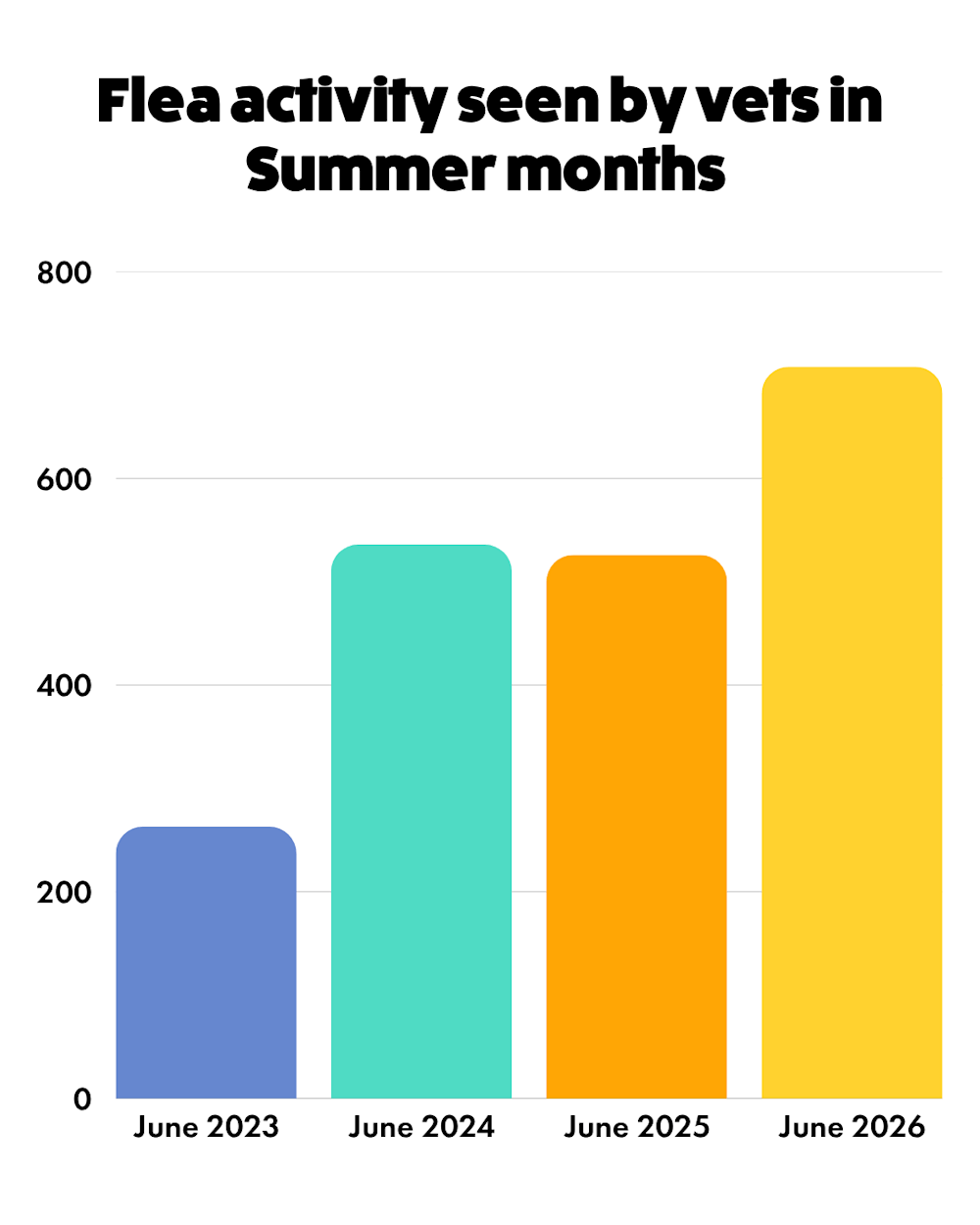
Other years with drought showed a stagnant growth in flea cases, but this summer fleas have gone crazy. Vets have recorded flea activity in the UK to have increased by 30% over the last 3 years.
The flea growth cycle shows how a flea goes from an egg to a full grown adult. Here are the four stages of flea’s life:
Egg → Larvae → Pupae → Adult Flea
The best conditions for flea eggs to hatch and turn into adult fleas are dark, warm and humid places, which is why carpets and furniture in your home tend to be the place fleas want to live. A flea can undergo their entire life cycle in as quick as 2 weeks if the conditions are right. This means with the surge of hotter and damper weather this summer, fleas are going from egg to biting adult in the quickest time possible. And more adult fleas mean more baby fleas are being born… So flea numbers are rapidly increasing.

Many flea eggs are laid by female fleas every day.
Flea eggs don’t have a sticky shell so they drop into carpet and pet bedding.
Eggs and larvae develop in these areas.
Flea larvae grow by feeding on small organic debris found in the environment.
Flea pupae form and it’s in this stage they can’t be killed by any treatment - their cocoon protects them.
Adult fleas eventually hatch and emerge to become active and reproduce once they find a dog or cat to feed on.
Adult fleas start laying eggs again quickly, which can quickly turn into a home infestation.
Flea dirt and flea bites are often the first signs that tell you there are fleas about.
The warmer weather usually means we spend more time outdoors and this summer is no different. The ongoing sunshine and back-to-back heatwaves have called for more walks, picnics in parks and BBQ’s in the garden. Ultimately, the more time we spend outdoors, the more likely our pets are to pick up insects and pests, like fleas. Also pets spending more time outside in local parks, gardens, and wooded areas have a higher chance of coming into contact with wildlife or other pets that have fleas.
Research based on SAVSNET data calls out that 28% of cats and 14% of dogs can be infested with fleas in early summer, and these numbers continue to rise as we reach peak summer. So fleas numbers are up, but the amount of pet parents giving regular flea treatment to their cat or dog is low. On average pet owners treat their pet for fleas once or twice a year however, vets across the country advise pet owners to use ongoing preventative flea treatment to stop flea bites and infestations. An affordable and convenient way to get rid of fleas is to use a Monthly Flea Subscription for Cats and Dogs to effectively kill fleas instantly when they hop on your pet.
To protect your pet, your home and even yourself from all of the fleas this summer, you need to:
Find a vet approved flea treatment for your pet
The most effective flea treatment for cats and dogs are vet approved formulas that kill both fleas and flea eggs, like Itch Flea Treatment for Dogs and Itch Flea Treatment for Cats.
Regularly groom your pet
Brush your pet every week with a flea comb to catch fleas before they start infesting your home. A flea comb will also spot any black specks in pet fur which could be flea dirt aka a sign you have fleas.
Wash bedding and fabrics often
Fleas live in warm and dark places near pets, like pet bedding and blankets. Wash these regularly on a high heat (60ºC or higher) and follow with a hot tumble dry to effectively kill fleas and flea eggs.
Vacuum clean your home at least once a week
Being on top of vacuuming goes a long way to get rid of fleas. Not only does vacuuming remove flea eggs and debris in your home, but the vibrations can encourage any flea eggs to hatch which you can then kill with a home flea treatment, like Itch Flea House Spray.
Fleas, ticks and lice can be a nightmare, especially in the summer, but with the right approach you can take control and rid your pets and home of these bothersome pests. Remember that parasites can be persistent, so patience and regular treatment will be your best friends! By addressing both your pet and their environment, you can ensure a flea-free and comfortable living space for both your furry companion and your family.
SHOP NOW

Share


With flea infestations up 47% in 2023, it’s important to get yourself prepped for this upcoming peak flea season to keep your pets, home and self happy and healthy. Keep reading for our expert tips on how to prevent these pesky parasites from taking over you and your pet's life this year.

Fleas are one of the most frustrating pests for pet owners and households alike. Once they settle in, they multiply quickly and can feel almost impossible to eliminate. The good news is that it is possible but it requires the right approach, consistency, and a bit of patience. Scroll for key steps you NEED to take in order to remove fleas fully from your home and pet!

We're tackling a topic that every responsible pet owner should be well-versed in – fleas. Join us as we explore the signs, symptoms, treatments, and prevention strategies to ensure your pet's well-being and your home's peace. Let's dive into the fascinating world of fleas!