




Table of Contents

How does a flea comb work?
How to flea comb a cat
How to flea comb a cat
How often should you flea comb a cat?
Does a flea comb really work?
What should I use instead of a flea comb?

First month flea FREE (*£3.49 P&P first month only)

Speedy same day dispatch**

12+ million flea & worm packs sold

Tailored to your pet
Blog Home

Flea
Ticks & Lice
Worming
Itch News
Itch Insights
Q&A

Table of Contents
How does a flea comb work?
How to flea comb a cat
How to flea comb a cat
How often should you flea comb a cat?
Does a flea comb really work?
What should I use instead of a flea comb?
To flea comb a cat, gently work a fine-toothed flea comb through their coat in the direction of hair growth, checking the comb and removing any fleas in soapy water. Using a flea comb should not be your primary treatment to get rid of fleas. It is a good addition when used alongside an effective vet-approved flea treatment, like Itch Flea Treatment for Cats.
A flea comb has closely spaced teeth designed to catch adult fleas and collect debris from your cat’s coat. It can help you spot a problem, remove some fleas and monitor what you are finding over time.
However, a clean comb does not guarantee a flea-free cat. Fleas move quickly, and cats may remove evidence while grooming. Look for dark specks as well as moving insects. Flea dirt is flea poo containing digested blood.
The best way to check if your cat has fleas is to brush the fur and wipe any excess onto a damp cotton wool pad, flea dirt slowly dissolves producing bloody streaks - If you spot dark brown or redness, it’s flea dirt. This means you have fleas. Uh oh.

• A flea comb suitable for cats• A normal grooming brush to use before flea combing• A white towel to catch fleas and hair• A bowl of warm water with a washing-up liquid• Plain water, kitchen roll and a few favourite treats.
Choose somewhere quiet with good lighting and an easily cleaned floor. Place the bowl where your cat cannot drink from it or knock it over. The soapy water is for captured fleas, not for washing your cat.
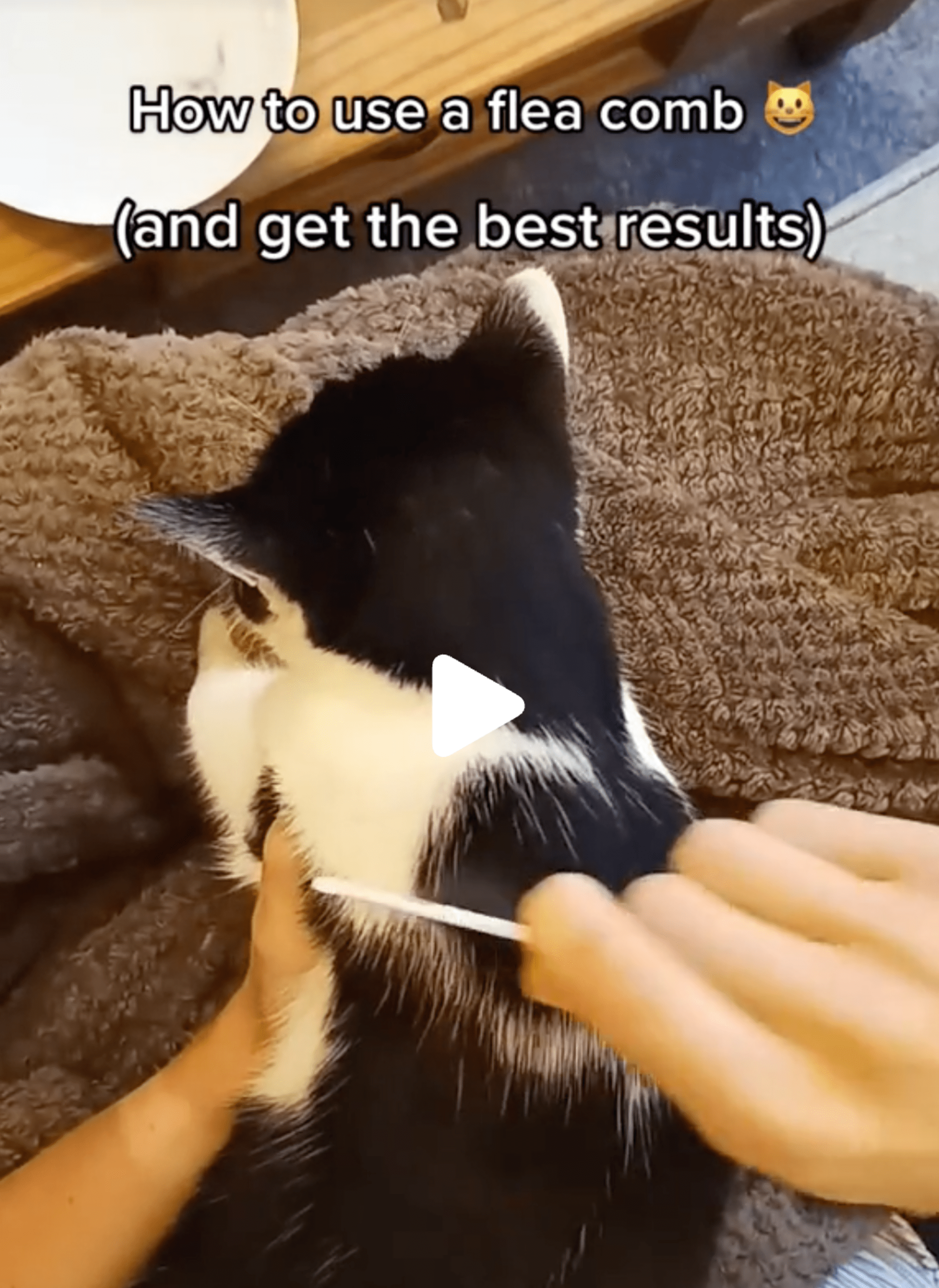
@itchpet Keep on top of the little hitchhikers and incorporate a flea comb into your pet’s regular pamper sesh 🙌 #itchpet #fleacomb #catgrooming #fleainfestation #catsoftiktok #fyp ♬ Hip Hop with impressive piano sound(793766) - Dusty Sky
Get comfortable
Your cat. Not you.
Pick a moment when your cat is relaxed and happy to be stroked. Let them sniff the comb, then reward calm interest with a treat. Start with a couple of gentle strokes in an area they already enjoy having touched.
Allow your cat to sit or stand naturally on a secure surface. Avoid pinning them down or holding them tightly - If they pull away, become tense or start swishing their tail, try again another time.
Brush them before flea combing
A flea comb’s narrow teeth can snag knots, particularly in a thick or long coat. Use your usual grooming brush first to remove loose hair and gently work through small tangles.
Do not force the flea comb through resistance. If you find tight mats, sore patches or anything your cat will not let you touch, stop working on that area
Comb gently in small sections
Begin around the shoulders or back of the neck if your cat is comfortable there, then work along the back and sides towards the tail. Follow the direction the hair naturally lies, using short, gentle strokes.
Part thicker fur with your fingers so you can reach through the coat without pressing the teeth into the skin. Aim to collect fleas close to the skin, rather than simply skimming the surface hair. Check the comb after each stroke before moving to the next small section.
Key areas to check:
Base of tail
Ears
Neck
Remove fleas from your comb
If you catch a flea, immediately dip the comb’s teeth into the soapy water and keep the flea beneath the surface. Do not leave a live flea sitting on the towel while you continue, it may jump away. Fleas can jump 100x their body length!
Clear trapped hair from the teeth, rinse away soap with plain water and dry the comb before using it again. Repeat. Keep the bowl separate from your cat and empty it once the captured fleas are dead. Afterwards, wash the comb and leave it clean and dry for the next session.
Check dark specks for flea dirt
Transfer any black, pepper-like specks onto a damp white kitchen roll. Flea dirt releases a reddish-brown stain as the blood it contains dissolves.
Your cat might also have flea eggs in its fur. Dark specks or spots are not flea eggs. Flea eggs are pale and microscopic unlike flea dirt.
During an active flea problem, a brief daily check can help remove fleas and track progress, provided your cat remains comfortable. Start with a minute or two and build up only if they are relaxed. Several short sessions may be more manageable than one long session.
If you have recently applied a spot-on treatment, like Itch Flea, don’t flea comb your cat for 48 hours. This will let the spot-on treatment soak into the skin and be effective at killing 100% of fleas on your cat.
Combing alone will not reliably clear an infestation. Fleas eggs fall off cats and hatch into larvae in two to 16 days within your home. So developing fleas remain in your carpet, bedding and furnishings. This means new fleas emerge and jump onto your cat.
To combat this, you need to treat your home with flea treatment as well as your pet. Effective household flea treatment, like Itch Flea House Spray will target the flea eggs and larvae in your house, killing 100% of fleas and stopping an infestation. When paired with vet-strength flea treatment, your cat becomes protected and the fleas fully get removed.
It’s important to vacuum thoroughly and wash bedding (your’s and your cat’s) whilst you are treating your pet and home. This helps remove any flea eggs nestled into areas that the insecticides can’t reach.
Flea comb a cat regularly during a flea infestation. Flea comb your cat everyday if you have a severe case of fleas! But make sure to use this method alongside vet-strength flea treatment on your cat because this kills 100% fleas instantly, whereas a flea comb doesn’t get rid of fleas, it just removes them from your cat’s coat.
Fleas, ticks and lice can be a nightmare, but with the right approach, you can take control and rid your pets and home of these bothersome pests. Remember that parasites can be persistent, so patience and regular treatment will be your best friends! By addressing both your pet and their environment, you can ensure a flea-free and comfortable living space for both your furry companion and your family.
SHOP NOW

Share


Fleas are stubborn little blighters and without effective treatment, it can feel like they just won’t go away! In order to get rid of fleas for good, you need to know how to kill every last flea. Keep reading to find out vet-recommended tips for treating a flea infestation and most importantly, stopping them from coming back!

Ah, the pesky little critters known as fleas - the bane of every pet owner's existence. These minuscule blood-suckers may seem insignificant at first glance, but don't let their size fool you. Fleas are not just annoying; they can pose serious health risks to our beloved furry friend if left unchecked.
Fleas are tiny insects that thrive on the blood of mammals, including our cherished pets. They can easily infest our homes and latch onto pets, nestle in their fur and cause a handful of problems if not dealt with promptly and properly.

Not sure if you’ve found a flea or a black speck on your pet? Fleas are not always easy to detect, but they are quick to turn your world upside down. If left untreated, fleas can cause full infestations, leaving you, your family and your pet itchy, frustrated and uncomfortable. Knowing you’ve got fleas is the first step to getting rid of them for good! Keep reading to be a hop ahead of these pesky pests.